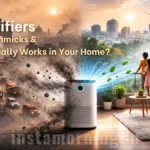
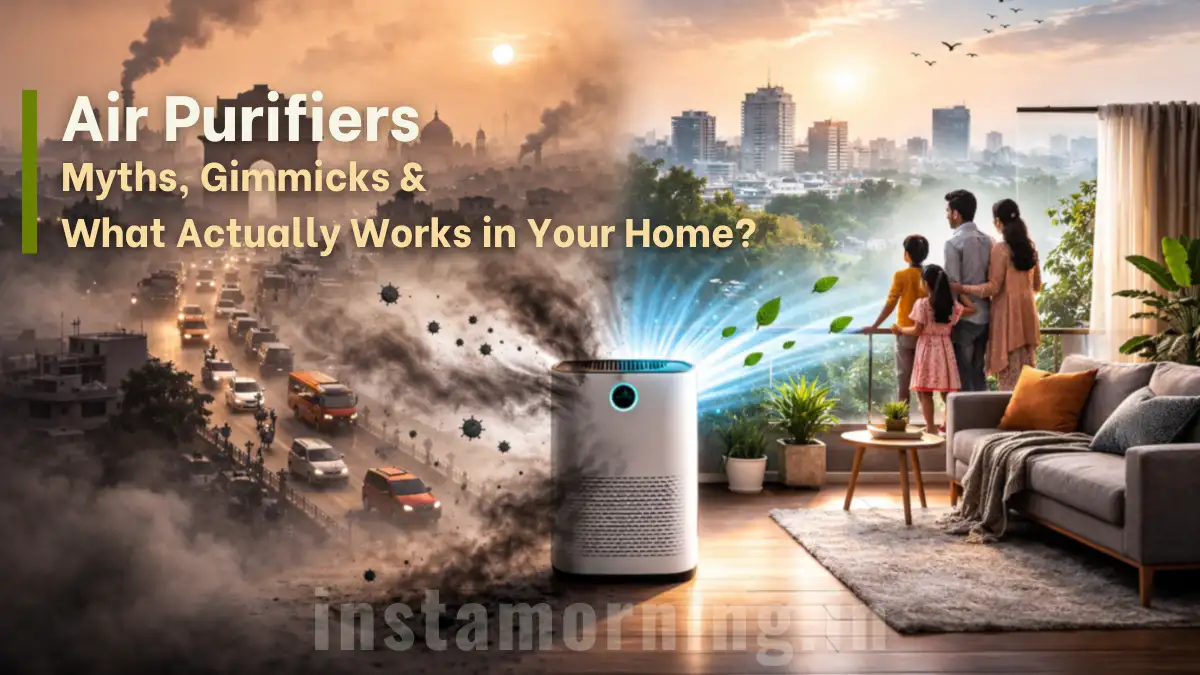
Air purifiers in India are everywhere right now but the real question is simple, are they protecting you or just selling you peace of mind?
- Why India’s air pollution can no longer be ignored?
- Why does Delhi suffer?
- Lessons from China’s Health Emergency
- Should You Buy An Air Purifier In Delhi Like Pollution?
- Why Air Purifiers in India Are No Longer Seen As Luxury Items?
- Do Air Purifiers Really Work?
- Do Air Purifiers Reduce Immunity?
- Why do air purifiers only work in closed rooms?
- HEPA filters, marketing labels and replacement costs
- Gimmicks That Do Not Protect You
- How We Tested Air Purifiers?
- Limitations Of Air Purifiers In Extreme Pollution
- Final Thoughts
- FAQs
So this is how a morning in Delhi feels. You wake up coughing. There is a soreness in your throat. The sun looks like a pale circle behind a grey haze. The sky is no longer blue.
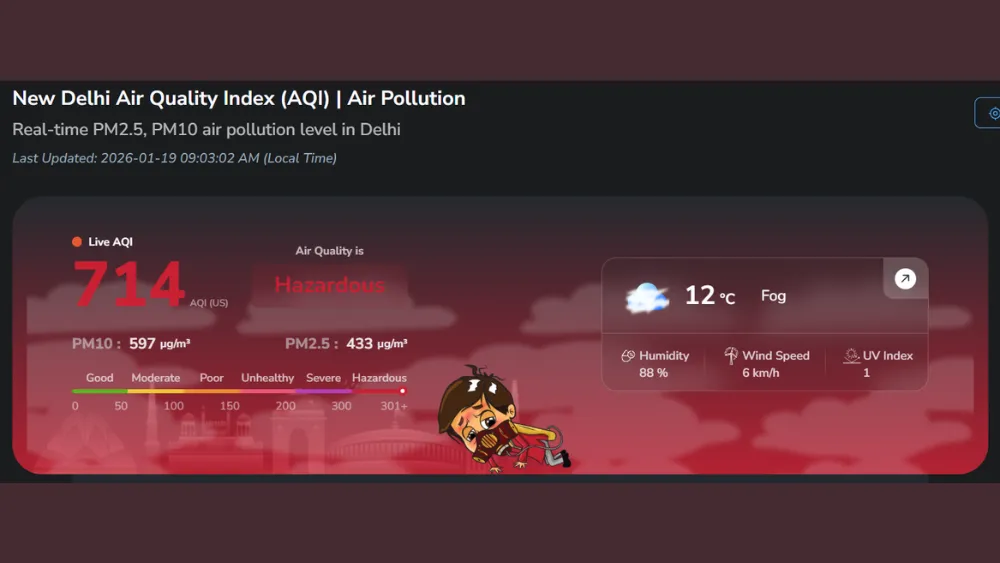
The PM2.5 level has crossed 400 and we have normalized it. We check AQI the way we check the weather. “Oh, it’s 350 today. So, it’s manageable.” This is not normal. This is how a health emergency begins to feel routine.
This is where the question around air purifiers in India truly begins. Are these devices a fear-driven purchase or are they one of the few tools individuals have left to protect themselves?
India is facing a nationwide air quality crisis. PM2.5 levels across multiple cities stayed consistently above 400 in 2025. In closed indoor spaces, air purifiers do reduce exposure to toxic air. However, many popular alternatives and marketed shortcuts fail to provide real protection.
Why India’s air pollution can no longer be ignored?
Air pollution in India is no longer a seasonal problem. It has turned into a slow, widespread health emergency that affects how people live, sleep and breathe.
PM2.5 Levels and Normalized Danger
In 2025, PM2.5 levels didn’t just spike and vanish. Unlike previous years that saw brief peaks of 1000, the current danger lies in their persistence. Levels remained consistently high at around 400, which is even worse.
As per global standards, AQI levels above 300 are hazardous. But in India, we still casually describe it as “poor air quality”. We need to change our perspective because our lives are at stake.
GRAP Stage IV and Emergency Restrictions
GRAP Stage IV has been enforced across Delhi NCR, including Delhi, Gurugram, Faridabad, Ghaziabad and Noida. CAQM invoked emergency measures after AQI entered the severe range.
Mumbai has also seen AQI crossing 300, forcing construction shutdowns inside the city. Kochi’s AQI recently exceeded 150, compared to 40 five years ago.
Why does Delhi suffer?
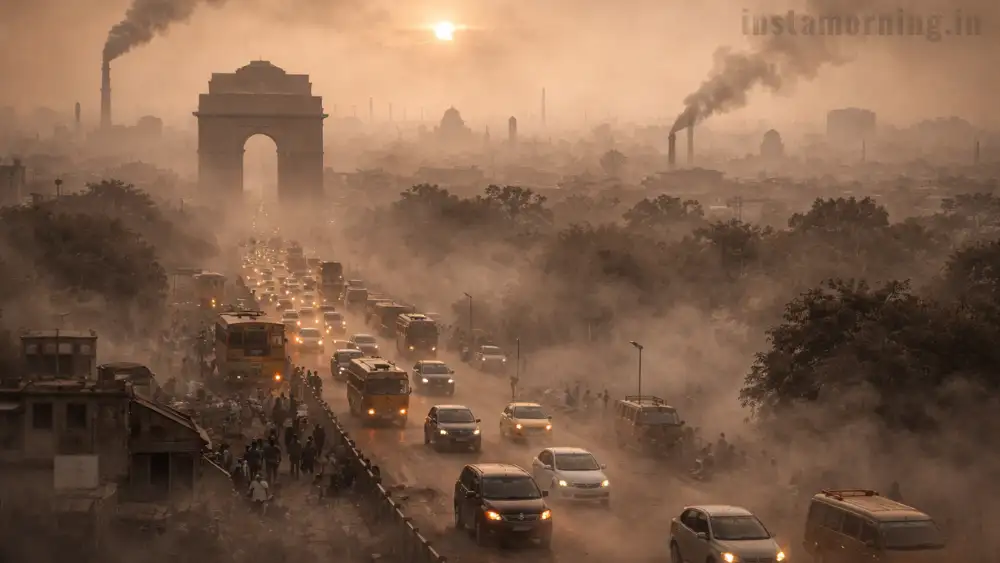
It is easy to believe that this is only about Delhi air pollution. That belief is one of the biggest myths.
Delhi’s Geography
Think of Delhi as sitting inside a giant, shallow bowl. It is landlocked, with the Aravalli hills on one side and the Himalayas forming a massive wall to the north.
During most of the year, winds act like a broom and push pollution away. In winter, heavy cold air settles low. A layer of warm air forms above it like a lid. Even when it is windy, smoke remains trapped. Delhi turns into a gas chamber.
Sources of pollution across cities
Pollution comes from multiple sources. Stubble burning, vehicle emissions, construction dust and firecrackers all contribute to rising particulate matter.
But this is not a Delhi-only crisis. India ranks third among the world’s most polluted countries after Pakistan and Bangladesh. Lists of polluted cities are dominated by Indian names like Gorakhpur, Ghazipur, Lucknow, Patna and Kanpur.
“It’s a Delhi Problem!” Myth
There is a common mindset that if this is Delhi’s problem, Delhi people will fix it! Why do I care? Why should anyone else care?
That logic collapses quickly because pollution trends show the problem is spreading nationwide. Even coastal cities like Mumbai and Kochi are now struggling. This is no longer regional. It is systemic.
Lessons from China’s Health Emergency
Right now, India is facing a health emergency. Every developing country goes through this phase. China faced the same crisis five years ago.
China addressed it through policy enforcement, structural reform and aggressive pollution control. The situation improved.
If China could do it, the uncomfortable question remains. Why can’t India? But until systemic solutions arrive, we need to take care of ourselves. We are left to manage risk inside our own homes.
Should You Buy An Air Purifier In Delhi Like Pollution?
Yes, air purifiers help manage Delhi’s air quality but they need two things to be effective: a True HEPA filter and a capacity that matches your room size. In a city where winter AQI often hits the “severe” category, indoor air can be nearly as toxic as outdoor air.
A good purifier can reduce indoor PM2.5 levels by 50% to 90% in a sealed room, significantly lowering the “load” on your lungs while you sleep. You should definitely buy one if you live in a city like Delhi, Lucknow or Patna, especially for bedrooms, to create a safe recovery zone for your respiratory system overnight.
Why Air Purifiers in India Are No Longer Seen As Luxury Items?
For decades, air purifiers were considered a niche product. They were often viewed as “nice-to-have” luxury items. Back in the 1990s and early 2000s, the general public didn’t really worry about “air quality”.
Unless you were dealing with a specific medical condition, owning an air purifier felt like an over-the-top, specialised hobby. Doctors used to advise patients with severe asthma or allergies to get an air purifier.
From niche product to household appliance
But now an air purifier is considered a household essential, much like a water purifier or an air conditioner. If you live in a city with high traffic, an area prone to dust and pollution or share a home with pets/allergies, an air purifier is generally viewed as a health necessity.
Air purifiers becoming popular in India is not driven by marketing alone. It is driven by lived experience. Outdoor air has become toxic. Indoor air is no longer automatically safe.
Do Air Purifiers Really Work?
Is air purifier necessary in Delhi pollution? How air purifier work in a room? What air purifier is the best? These are some of the core questions behind every purchase decision.
The short answer is YES. Air Purifiers do work. We tested air purifiers priced from ₹3,000 to ₹45,000 to understand what works, what fails and what should be avoided.
Now, here’s a closer look at how the testing was done and what we found.
Smoke Chamber Testing
We filled a sealed glass chamber with smoke to replicate the pollution. An air purifier placed inside cleared the smoke within 5 minutes.
This confirms that air purifiers do clean polluted indoor air when used correctly.
The NASA Plant Experiment Explained
Many claims online say NASA has proved that plants clean indoor air. The study used a Golden Pothos, commonly called a money plant.
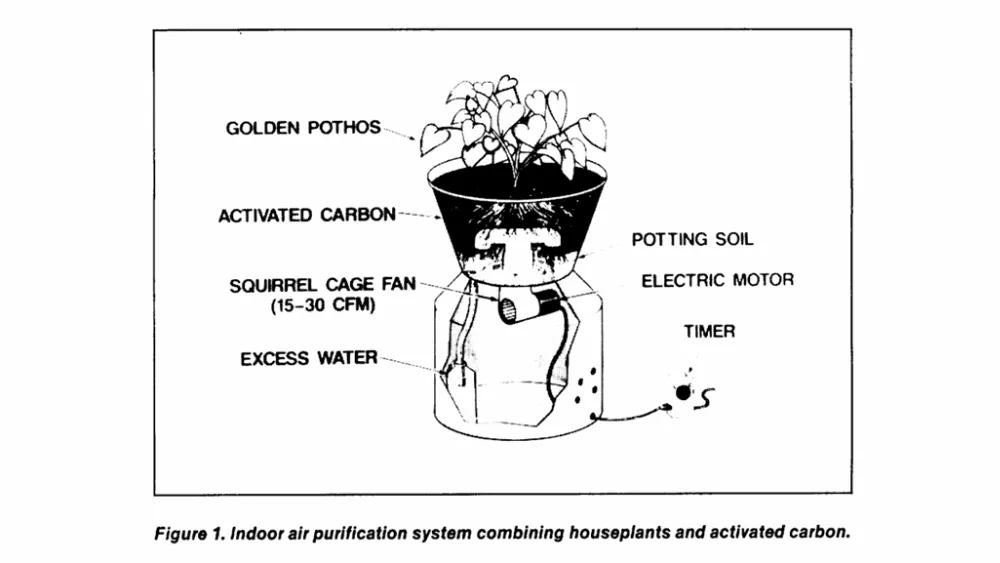
The plant was placed inside a refrigerator-sized sealed box. The setup included an electric fan and motor to clean the air. Quoting this experiment to claim that plants can clean a home is way overstated. This is why air purifier vs plants comparisons are often misleading.
Do Air Purifiers Reduce Immunity?
A common concern is that using an air purifier will weaken the immune system. Many people also worry, “If I get an air purifier, my immunity will go down. I’ll fall sick when I step outside in the pollution.”
That isn’t true. Air purifiers have nothing to do with immunity.
Pollution does not build strength!
Air pollution behaves more like radiation exposure. You should not train your body to tolerate it by inhaling toxic air. So, avoid going out as much as possible. Limiting the time spent breathing polluted air protects your health.
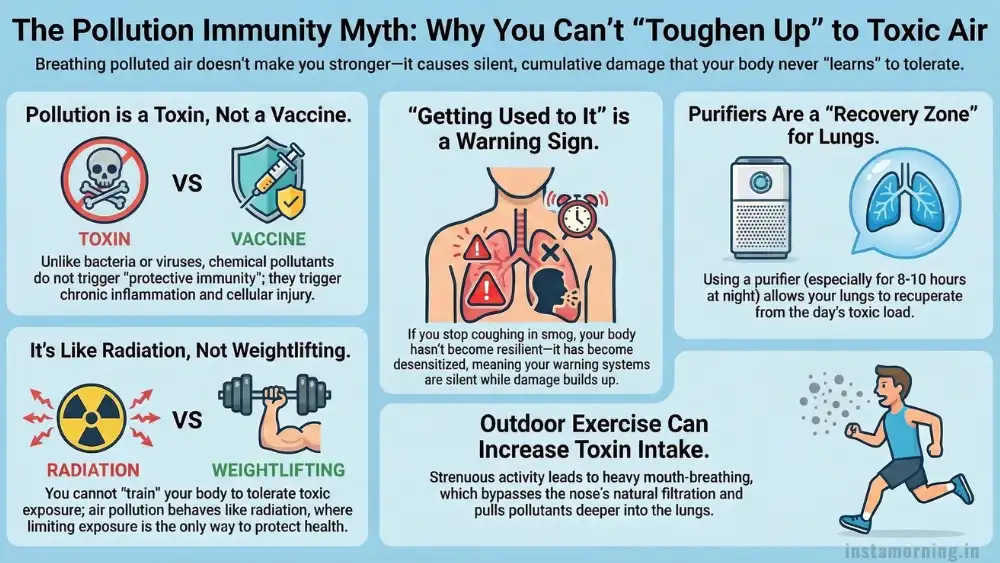
Jogging or walking outdoors during heavy pollution only increases damage. You will not become an “alpha male” by inhaling polluted air. An air purifier ensures that at least the indoor air is safe.
Breathing polluted air does not make anyone stronger. The immunity myth has no basis.
Why do air purifiers only work in closed rooms?
Air purifiers gradually cycle out polluted indoor air; however, they are only truly effective if the doors and windows remain closed.
The closed room requirement
A purifier pulls in polluted air, filters it and releases cleaner air on the other side. In a closed bedroom or living room, pollution levels fall over time.
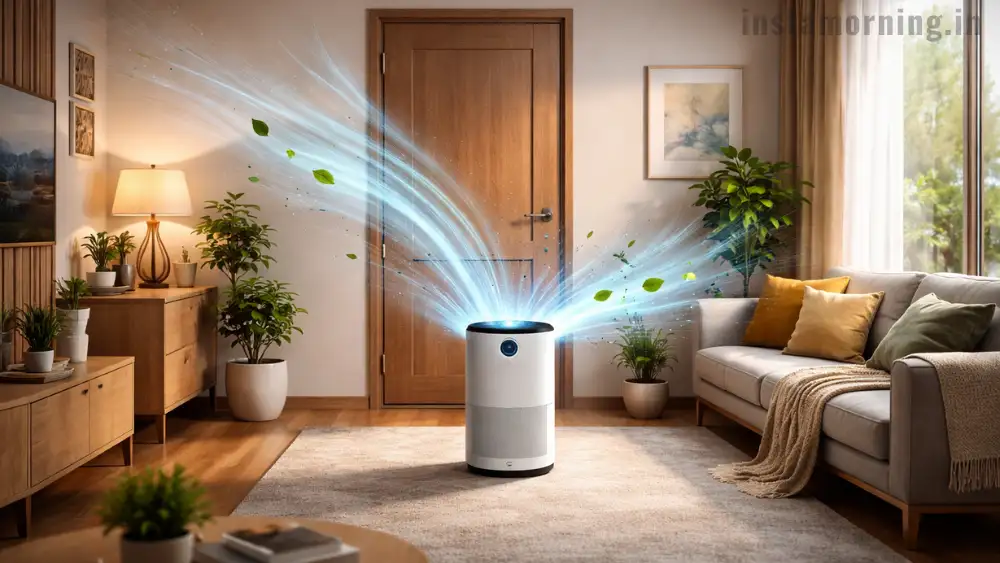
But if you open the door again and outdoor pollution rushes back in, the pollution level on the air purifier will start to rise again. So in order to get proper air purification, you need to shut your room.
HEPA filters, marketing labels and replacement costs
The filter determines whether an air purifier works or fails.
True HEPA vs Misleading Labels
Online marketplaces are full of products labelled as HEPA type air purifiers or HEPA like air purifiers. These are marketing terms.
True HEPA filter: True HEPA is a regulated term. It is the most reliable filter but a bit costly. It provides hospital-grade air cleaning. A True HEPA filter is tested to capture 99.97% of particles as small as 0.3 microns (including smoke, bacteria and microscopic allergens)
HEPA Type Filter: It is less reliable. The material used in this filter is similar to a HEPA filter, but it has not been certified to meet the 99.97% efficiency standard. It is cheaper but less effective for people with severe allergies or respiratory issues.
HEPA Like Filter: “HEPA-like” filters are basically the cheapest filters that sound like real HEPA filters but aren’t the same thing. It has a much lower density than a HEPA filter. It is more like a cloth mask. It helps a bit but it’s nowhere near as reliable.
But if you are considering buying an air purifier, you should only buy true HEPA air purifier models. Prefer H13 or H14 filters, which effectively capture fine particulate matter.
Anything apart from True HEPA is just misleading marketing.
Terms such as HEPA-like, HEPA-type and HEPA-style are used mainly for marketing. Companies use them to create the impression of high filtration, even when the product does not meet the strict performance standards required for True HEPA.
Filter Life and Replacement
These HEPA filters have a life. After some time of usage, the filters get dirty, black and clogged. They can no longer do the air filtration efficiently. Washing a HEPA filter is not recommended, as water damages the filter.
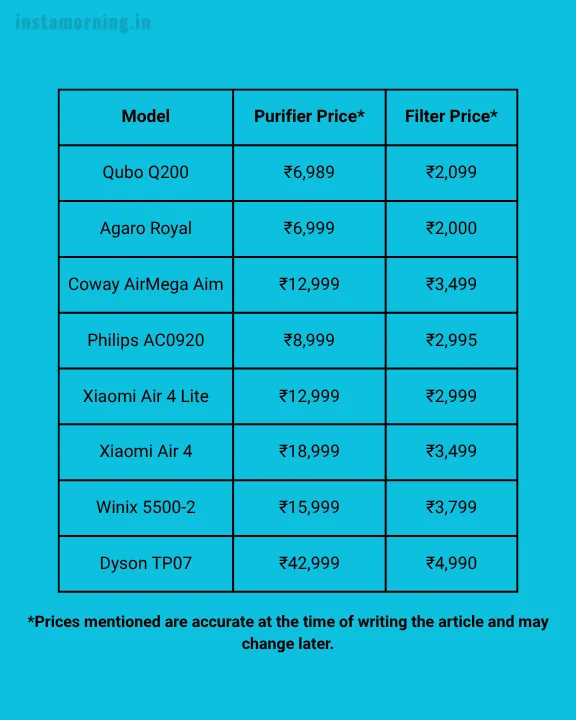
These filters should be replaced with the new ones. Replacement is required every 6 to 12 months, depending on how frequently you use your air purifier.
Take a look at the air purifier filter replacement cost for each purifier we tested, giving you a clear view of long-term maintenance expenses:
Brand Stability And E‑waste Risk
Pay close attention to brand reliability before buying an air purifier. Some newer or lesser-known brands stop selling their purifiers or replacement filters after a short time.
In those situations, the filter or the whole air purifier just becomes just use and throw. Always choose a brand with at least 4 to 5 years of consistent market presence. Avoid very cheap or new brands, since poor filter availability can quickly turn the purifier into e-waste.
Gimmicks That Do Not Protect You
Fear has created a market full of shortcuts.
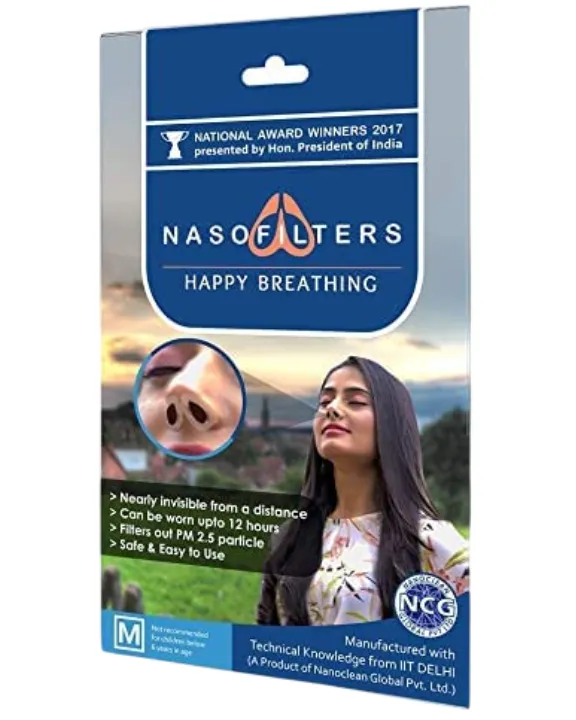
Nose Filter:
Nose filters did not work during our testing. Just wear a mask instead of a nose filter, if you really want to.
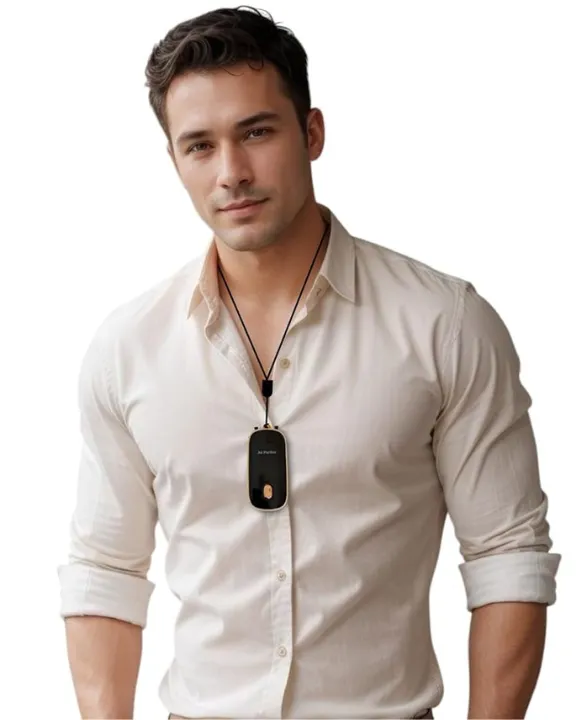
Wearable Air Purifier Locket:
There is also a locket sold on Amazon that claims to act as a portable, personal air purifier. Let’s understand the idea behind it.
Picture a small plane made from tissue paper. Toss it into the air and it flies easily, carried by the wind. Now sprinkle a few drops of water on it. The plane loses lift and drops almost instantly.
This example explains the device’s working principle. Think of the tissue plane as PM2.5 particles. These particles are extremely light, so they stay suspended and travel freely in the air. The locket releases ions that attach to pollutants, increasing their weight so they fall faster.
The goal is simple: move pollution away from your breathing zone. Unlike traditional purifiers, this Wearable Air Purifier Locket lacks a physical filter. No HEPA is involved. They rely on a process known as ionization.
In heavy pollution, this is like using a handheld fan inside a burning building. These devices only show limited results in sealed chambers or a closed room in your home. You cannot take it and wear it outside in the open.
So, if a locket costs ₹3,000 to ₹4,000 and stays limited to personal use at home, spending about ₹2,000 more on a full air purifier is a smarter move.
A standard air purifier cleans air for the entire room and delivers stronger performance. It will work for everyone in the room. In comparison, buying a locket air purifier doesn’t make any sense.
How We Tested Air Purifiers?
Before we reveal which air purifier you should buy based on our test results, take a moment to understand how the testing was carried out.
We filled a standard Indian bedroom sized room (~200 ft²) with smoke, similar to what you would find in a typical Indian home. The AQI level was pushed to around 1000.
After that, we ran multiple air purifiers one at a time and tracked how quickly each purifier reduced the pollution. The goal was simple: identify which purifier brought the AQI level down the most.
After extensive testing, we identified a few air purifiers with the best performance as strong choices for most homes.
Each model delivered impressive results during our trials and reduced indoor pollution effectively.
Best Air Purifier For Home
After testing multiple models across different room sizes, one pattern became obvious. Price in this category is directly tied to airflow strength, filter size, features and coverage capacity. As room size increases, purification demands rise and so does cost.
Instead of thinking in terms of “cheap versus expensive,” it makes more sense to think in terms of space and airflow. Below are the air purifiers that earned a spot on our recommended list for home use:
For Small Bedrooms and Study Rooms
Compact rooms do not require aggressive airflow. Entry level models typically fall below ₹10,000 and are designed for coverage up to roughly 225–300 ft². These low budget air purifiers work well in bedrooms, study areas or compact living spaces. For smaller homes, these are practical choices:
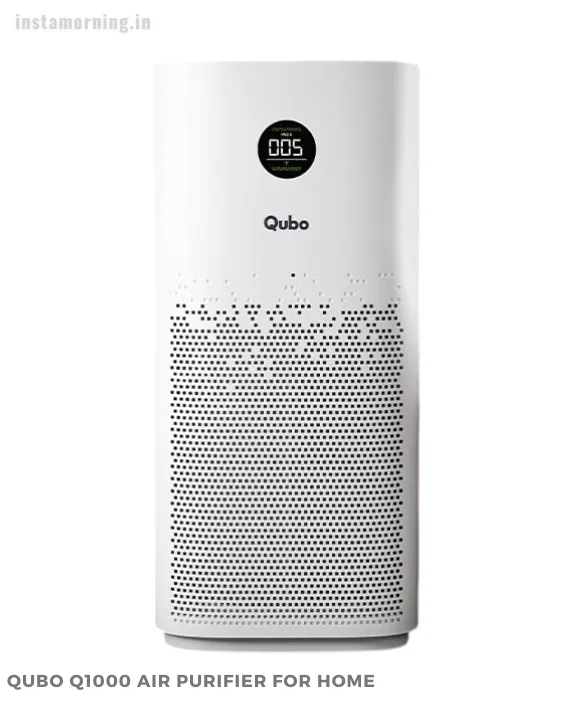
1. Qubo Q200 (suitable for rooms up to 225 ft²)
2. Agaro Royal (suitable for rooms up to 300 ft²)
For Medium Bedrooms and Master Rooms
Once the room size crosses 350–400 ft², airflow becomes more important. Models in the ₹10,000–₹15,000 range typically offer better features and airflow:
1. Xiaomi Air 4 Lite (suitable for rooms up to 450 ft²)
2. Coway AirMega Aim (suitable for rooms up to 400 ft²)
For Living Rooms and Large Halls
Need air purifiers for larger rooms, like a living room, a hall or a gathering area? Open spaces require higher CADR and faster cleaning of indoor air. This pushes pricing closer to ₹15,000–₹20,000:
1. Xiaomi Smart Air 4 (suitable for rooms up to 600 ft²)
2. Honeywell Air Touch P2 (suitable for rooms up to 800 ft²)
For Office Use
In offices or studio environments, foot traffic and frequent door movement require industry level airflow. The following purifiers fit commercial spaces like offices, showrooms and retail shops:
1. Smart Air Blast Mk II (suitable for rooms up to 1400 ft²)
2. Smart Air Blast Mini Mk II (suitable for rooms up to 900 ft²)
Is Dyson Air Purifier Worth The Price?
We also tested the Dyson TP07 air purifier. It looks fancy. It includes a bladeless fan and app support for speed control. So, you can control the fan speed and all of that. But you can easily ignore it. Let me tell you why.
It costs around 45000 Indian Rupees. Dyson doesn’t mention the CADR number. They believe it’s a flawed system. So, no idea how big a room this can clean. That leaves buyers guessing about effective room coverage. This air purifier does nothing different from the Xiaomi Smart Air 4, which costs far less.
The whole thing is, this is just a fancy air purifier, which also doubles as a home decor item. This is a design-driven purchase, not a performance upgrade.
Limitations Of Air Purifiers In Extreme Pollution
In extreme pollution where outdoor AQI exceeds 400, purifiers face significant limits. Even a True HEPA filter struggles if the room isn’t perfectly sealed, as toxic air constantly seeps through gaps.
Furthermore, filters clog much faster, reducing efficiency and they cannot remove dangerous gaseous pollutants unless equipped with a thick activated carbon layer. Air Purifiers are indoor assistants, not absolute shields.
Final Thoughts
Air purifiers work when used correctly. Gimmicks do not. Buying the right air purifier for dust, smog, firecrackers and Diwali pollution can reduce indoor exposure significantly.
I hope the government works on it and fixes the air quality. But this air pollution issue is India-wide and it will stay like this for the next 2 to 3 years.
I want more and more people to talk about it, as Air Pollution is not one man’s problem. It is everyone’s problem. Talking about it creates awareness and ensures that our loved ones are safe and healthy.
Because for India to do bigger and better things, we need a healthy youth, society and clean environment.
If you have questions about choosing the best air purifier India offers, ask them in the comments.
Disclaimer: Prices mentioned are accurate at the time of writing and may change later. We recommend checking current prices. This article may contain affiliate links. If you purchase after clicking on them, InstaMorning may earn a small commission at no extra cost to you. Also, note that the mentioned products are picked based on user ratings and InstaMorning is not responsible for the after-sales service of any products.
Frequently Asked Questions (FAQs)
1. Do air purifiers really work in Delhi like pollution?
Yes. In closed rooms, air purifiers significantly reduce indoor PM2.5 levels. In testing, smoke was cleared within five minutes in a sealed chamber and bedroom pollution raised to 500–600 dropped substantially. Effectiveness depends on using a True HEPA H13 or H14 filter and keeping the room shut.
2. Can plants replace an air purifier at home?
No. The NASA study often quoted used a money plant inside a refrigerator-sized sealed box with a fan and motor. That setup does not reflect real homes. Plants alone cannot clean indoor air effectively in high pollution conditions.
3. Will using an air purifier weaken my immunity?
No. Air purifiers do not affect immunity. Pollution is compared to radiation exposure, meaning reducing exposure protects your health. Breathing polluted air does not build strength. Minimizing time outdoors during heavy smog and improving indoor air quality helps reduce long-term respiratory risk.
4. Why must air purifiers be used in closed rooms?
Air purifiers work by pulling polluted air through filters and releasing cleaner air. If doors or windows remain open, outdoor pollution continuously enters the room. For effective purification, the room must remain closed so polluted indoor air can be gradually replaced.
5. What should I check before buying an air purifier?
Buy only True HEPA models, preferably H13 or H14. Avoid HEPA-like or HEPA-type labels. Check CADR rating to match room size and consider replacement filter costs every 6–12 months. Choose established brands to avoid filter shortages and potential e-waste issues.